
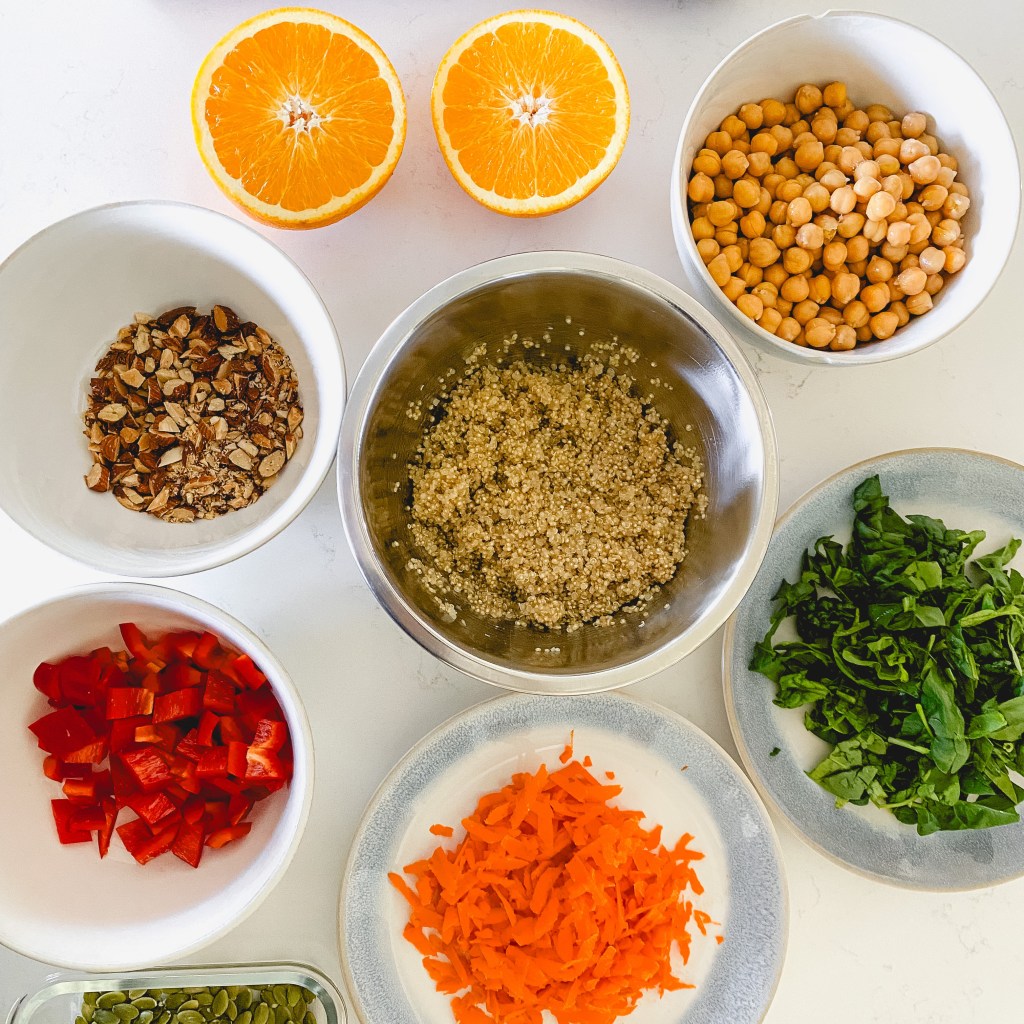
Research suggests that eating a diverse range of plants every week can increase the diversity of our beneficial gut bacteria and thereby support our gut health. This article will explain what we mean when we talk about our gut bacteria, why we should care about our gut microbiome and how many plants we should aim to consume each week.
What is the gut microbiome?
The gut microbiome is a community of microorganisms that lives in our intestinal system, mainly the colon. The composition of these microorganisms is unique to each person. Different types of microorganisms perform different functions. For example, beneficial bacteria produce certain vitamins and help with the absorption of certain minerals.
The gut microbiome affects a variety of things in the body including the metabolism, immune system, mood and hormones. When there is an imbalance between healthy and unhealthy gut bacteria it may therefore have a negative impact on our health. This means that it is important that we support the health of the gut microbiome.
Why should you eat a diverse range of plants?
The food we eat impacts our gut microbiome. Research suggests that eating 30 different types of plants per week can increase the health and diversity of our gut bacteria and thereby support our gut health. Different types of plants include different nutrients such as vitamins, minerals and phytochemicals. Eating more plants also increases our fibre intake. Certain types of fibre have a prebiotic effect, which means that they act as food for our gut bacteria. Our gut bacteria ferment these prebiotic foods, producing gut-protective short-chain fatty acids.
30 different types of plants may seem like a lot, however this includes a broad range of foods such as fruits, vegetables, nuts, seeds, wholegrains, beans, lentils, herbs and spices. Even if you are not reaching 30 different types of plants per week, simply increasing the amount of plants you are consuming is a positive change to make. You may want to increase your intake of plants gradually, as you may otherwise experience digestive symptoms such as gas and bloating.
Here are some ideas of ways to increase your intake of plants:
- Add a sprinkle of nuts or seeds to a salad
- Try buying different types of fruit to snack on
- Attempt to eat plants which are each colour of the rainbow every day
- Use herbs and spices in your cooking
- Get creative in the kitchen and try new recipes using plants you might not usually cook with

Interested in learning more about supporting your gut health?
I provide one-on-one nutrition consultations and coaching packages! I can answer your questions surrounding nutrition and work with you to create a nutrition plan which is tailored specifically to you, your needs and your lifestyle. I provide free discovery calls to help you decide whether you would benefit from working with me – book here!
This article is intended for information purposes on general wellbeing only and is not meant for the purpose of medical diagnosis, treatment or prescribing medicine for any disease, or any licensed or controlled act which may constitute the practice of medicine.
 Hannah Bristow Nutrition
Leave a comment